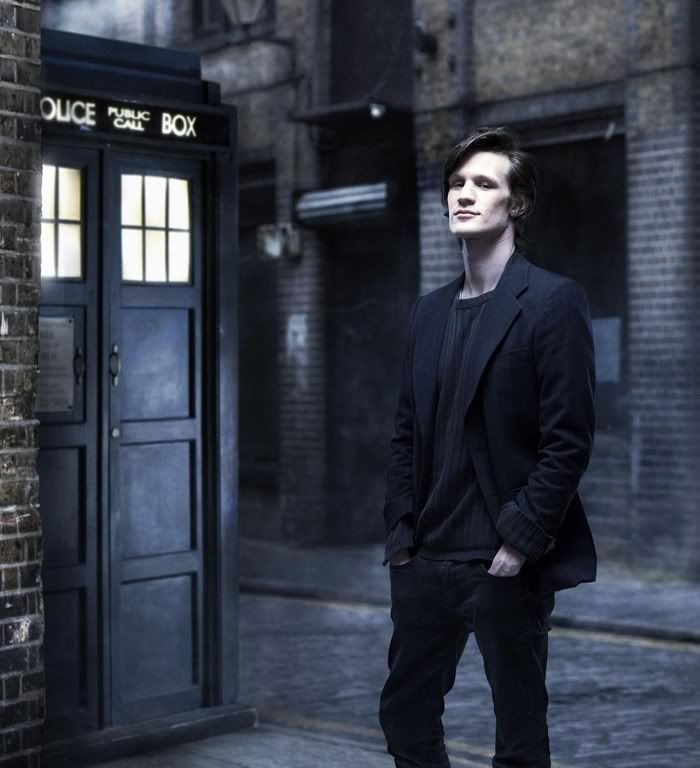
||| WARNING ||| SPOILERS for Series Eight, Episode One
So; new Doctor Who.
Unlike many others, or so I've been led to believe by the interwebs, I actually like Peter Capaldi's take on it.
I am however disappointed with;
The heavy handed narrative ("Not you boyfriend" -- enough already, we get it. You said it a bazillion times in the story and everyone who works on the show and their mother has said it in every press promo/interview they've had a chance to jump into);
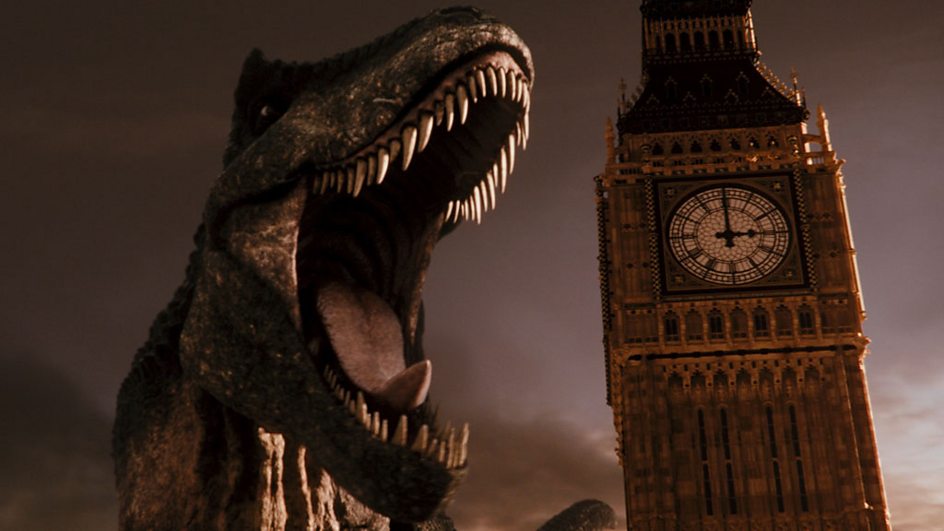
The over reliance on stunt McGuffins (Oh look Steven Moffat just blew a third of the season budget on an unimportant dinosaur cameo just for farts);
And the continued indulgence of retreading previous, Moffatian, plot contrivances (ideas) which, granted, fans love BUT at best work as well as they did because of their 'flash-in-the-pan' sensibility;
Also; while most of fandom loved the Eleventh Doctor cameo I thought it signalled a lack of confidence on the part of the creative team (an endorsement of the Doctor from the Doctor?!?! Again with the heavy-handedness and reliance on sappy sentimentality rather than something substantial).
The image of Capaldi on the fob watch WAS kinda silly BUT BBC imprinting their endless fascination with the new Doctor's eyebrows on the title again felt like they were beating us over the head with it -- so yea; not good. And WHY leave out the Gallifreyan elements? I felt that worked.
Look. MOARE EYEBROWS!
I yearn for a time when ideas/concepts/plot/narrative relies more on subtleties rather than the heavy-handedness that's been a hallmark of late. This might be the result of catering to the wider global audiences which the show now seems to be ingratiating itself to -- undoubtedly a winning strategy which will retain some of the old fans and garner even more new ones.
Me? I didn't like it so much. A new Doctor was the perfect opportunity to switch up the narrative approach BUT that opportunity has been missed out on.
I might be yearning for a bygone time of storylines reminiscent of the 'Bad Wolf' arc -- I'm probably amongst the very few who are. I do realise what I'm suggesting is not an original though BUT in my view that's the type of storytelling that works best with this show. Sure you can go big and bombastic but that doesn't work as well when it's the modus operandi of the show.
Total eye candy BUT used more self constraint than the show's creative team.
However it looks like most of fandom are satisfied with, and even blown away by, the series Eight premier episode. So while everyone else celebrates I'll contemplate a break from a show that I've trumpeted as a benchmark in science fiction ever since I got into the, restarted, series in 2005.
Why? Because this show no longer is bigger on the inside.
Well, if I really must have a reason to talk about Hitchcock I'm going to have to rewind and fast forward quite a bit...
Too often the excuse for silly, immature, by the numbers cinema is passed on to the audience.
It shouldn't be.
See the argument goes that the audience can't, or won't be bothered, to work out "complex" ideas in a film. And someone who's new to the medium, or who hasn't checked out cinema going back a few decades or more, might be forgiven for thinking as such.
Actually, no. If you're a "movie lover" and haven't checked out at least some "old" movies/films by the likes of Orson Welles, Akira Kurosawa, François Truffaut and other such masters, then shame on you.
Well... not really shame on you... more like your loss... your serious loss.
Trailer for Akira Kurosawa's 'Rashomon'
So, let's talk about Hitchcock. Still no?
I see.
I might have been a tad vague in my reasoning for talking about Hitchcock. Hmmm... how to put it?
Okay.
You hear about how everyone... well a fewpeople... well... maybe just a few critics are deriding that little film about robots in disguise? I mean it's the most recent picture in a trilogy of sorts... You know... the one with the giant robots and huge explosions and other... you know... explosive situations? Yea. That movie.
A lot of the times that sort of thing, because of the fact that maybe it's taking in boat loads of money, is justified, with "audiences really prefer not to think through a movie" - I'm just paraphrasing here mind. And recent, slightly skewed "research" might lead one to justify that...
Hence my want to talk about Hitchcock. Errr... no? Why? Cos we can talk about all those other guys I mentioned before you say?
Trailer for François Truffaut's 'Les Quatre cents coups' (400 Blows)
Yea. You should really go check those guys out. Their work is beautiful, evocative and thought provoking - even when they're working with black and white and no explosions. But while they may have had mainstream appeal in their own right I wouldn't go so far as to say they had global appeal in their time... alas, they seem to have trouble with global appeal even in our time.
So.
Really.
Let's talk about Hitchcock.
Yes?
Good. Great!
He proved that you could make money with "high concept" films while not alienating the audience and still garner critical acclaim and global fame... although initially, he may have had a tough time getting some American critics to see the value in his work.
I see you pulling away now... a few more minutes? I promise I'll make it worth your while.
Trailer for 'Psycho'
Heard of 'Psycho' (1960)? No. Not that 1998 version - which I hear was a travesty... No I really didn't watch it. There was no need to. Go see Hitchcock's original Psycho you'll see what I mean - it was shot in black and white but even with that "handicap" it does so well in eliciting a visceral reaction out of you.
If you've heard somebody describe any story as a "modern, psychological yarn" you will be surprised to see how much of that you see here in a film made in 1960 - and how much faith, unlike most modern mainstream directors, Hitchcock had in his audience.
So you think that Psycho is not that hard to follow compared to "modern" standards?
Technical innovation aside, the story telling is intense, complicated and riveting. And I would argue that its complexity holds up even by modern "intellectual" standards.
That's all well and good you say? You want a pop-corn movie? One that you can sit back and enjoy? One that takes you through exciting chases, chills, thrills and a few laughs?
You don't mind all that and a little bit of intelligence and humour do you?
Try 'North by Northwest' (1959) on for size. But be warned - it's more than a bit intelligent and it has a brilliant sense of humour. You get chases, mistaken identities, spies, damsels who are decidedly not in distress (Who'd have thunk?!?! In the 50s?!?!), killer crop-duster planes... KILLER CROP-DUSTER PLANES DAMMIT!!!
Trailer for 'North by Northwest'
And those are just some of the highlights of his career.
Some of his work has inspired, and keeps inspiring, some of our greatest filmmakers today.
Take a look at Christopher Nolan's work and I can't help but see a Hitchcockian sense of humour and a sense of the same crisp, lean narrative.
Does 'Memento' (2000) not have a wicked sense of humour while making your mind do summersaults? That's kind of what Hitchcock does with North by Northwest although with a much lesser degree of a mental workout - that he leaves for Vertigo.
You know that thing that David Fincher keeps trying to do ever so often with the long, uninterrupted shots? He tried it a couple of times with 'Fight Club' (1999) and 'Panic Room'(2002)? I'd go so far as to argue that that was pure Hitchcock inspired - see 'Rope' (1948) and you'll get where I'm coming from.
Tailer for 'Rope' - like a few of Hitchcock's trailers
contains little from the actual film.
So yea.
That's why we needed to talk about Hitchcock.
Also, remember the other guys I told you about? Well... Hitchcock was my stepping stone to those guys. No. He's not less important than they are - if anything, for me, he might be slightly more important.
So what it comes down to... what I guess I am saying is...
It's okay if you make "crappy" movies - just don't justify it by saying that the audience won't get it. Yea... what I'm saying is... the audience are intelligent enough to grasp almost anything you can throw at them.
Seriously.
If they weren't David Lynch and a few other directors you might have heard of wouldn't have careers.
Edit; July 12, 2011:
I consider myself not adequately chastised for missing out on naming Ingmar Bergman in my original post - that is one name which should not have been missed. I've attempted to fix this inexcusable oversight by adding a link to the original post - I felt it might be cheating to edit the text afterwards. Thanks to shaari for bringing this to my attention.
Or rather, does anybody given the responsibility of bringing the essence of Superman to the "mainstream" not understand him?
Smallville just(ish) completed an extremely successful(how?!?!?!) 10 seasons and I'm left thinking "Five for Fighting" understood Superman better than the writers on that show.
"Superman (It's not easy)" by Five for Fighting
Yea, I know they set the "no tights, no flight" rule WAAAAAay in the beginning and maybe THAT should've been the first clue that they didn't get Clark.
Not. At. All.
And it pains me that it went on for so long, twisting the Superman mythology left and right and generally messing things up in the least creative ways imaginable - it even proved unsalvageable to Geoff Johns.
Promotional photo for Smallville
BUT it happened. And, thankfully, it's over. Yet it's left this really bad taste in my mouth. A feeling of despair permeates my soul every time I hear about any new Superman related developments.
Don't get me wrong. HUGE fan of Christopher Nolan's directing and David S. Goyer's writing. And although Nolan is not directing the next Superman film, that honour falling to a Zack Snyder of "300" and "Watchmen" fame, I am willing to suspend my skepticism one final(?) time - cos that's at least part of what Superman is about.
Isn't it?
Ever the eternal optimist. Ever the eternal "boy scout". Ever the eternal barometer of doing what's right, even when the odds seem insurmountable and grossly out favour him - and through it all you know that he will emerge untainted and heroic... even if it meant dying.
What's that you say? Smallville was a reimagining of sorts? It was an attempt to go another way? What coulda been?
Then why do it as Superman? It could have been the origins story of another superhero altogether - a new one. Oh... right... without the name recognition a lot less of the series would have been commissioned and therefore it would not have been as successful?
I beg to differ.
Cover art for Superman: Secret Identity
Superman: Secret Identity did all of that and more and STILL managed to retain the essence that is Superman. It's a shame that it can't be made into the next Superman film though... but MAN is it a beautiful story... Kurt Busiek and Stuart Immonen out did themselves, and most Superman writers in recent memory, and they weren't even writing about "the real" Clark Kent...
Secret Identity moved me and provoked thought about heroism, our global condition and obligation(s) - all the while staying true in service to its inspiration.
We should be so lucky if an iota of that thought process went into anything Superman that is to come in the near future...
The first I'd heard of it was just the name. Just that it was a great piece of science fiction that might be developed into a film by Mel Gibson – given that this was just after Braveheart (1995) and the fact that I was on my way to becoming a science fiction nut must have been why it stuck.
Another reason might have been that, even though I read a lot, I'd never read a full-length science fiction novel. I had watched, and continue to watch, a lot of such films but had never read a book. Yet another reason might have been that Ray Bradbury, one of the greatest science fiction writers of all time, had written it.
But, I digress...
I had totally forgotten about the book until our lecturer Kit Leee (three 'E's not two – now known as Antares) asked us to write a book review that was not really a book review.
Sitting in a taxi, on my way to college I noticed its code number, used to identify it to the station, comprised of 4-5-1 . 'What a strange coincidence!' I though. And that's how I wound up with the subject of my non-review;
The 50th Anniversary Edition cover art for Fahrenheit 451
Fahrenheit 451 (1953), the book about a fireman who lit fires. A book that takes us to a future which holds reading or owning books illegal. Where books are burnt because they 'confuse ' us.
Herein followeth the review:
Taking its title from the temperature at which book paper auto-ignites Fahrenheit 451 is supposedly the story of Guy Montag – fireman no. 451. A fireman who burns for a living. A 'fireman' who is good at what he does.
He burns books because they make society 'unhealthy' – because the books make 'no sense ' and speak of things other than 'reality'. He is good because he does what he does without question.
He enjoys the sound – the searing death rattle of the pages as they're consumed by the orange beast. And the glow of the flame, as it shifts colours from red to blue to black/grey and orange transforming the pages to ash that scatter and dissolve in the wind, thrills him.
But then along comes Clarisse, and out go Montag's automated responses to books. The animal instinct which closed on, and ripped the books apart before he set fire to them, starts to turn the pages with the gentlest of touch, reading from them, soaking up their knowledge and emotion, reaching awareness from within.
Fahrenheit 451 is often heralded as the classic bestseller about censorship but at a cursory glance the word 'censorship' does not have the full impact, that perhaps it should.
I mean, what does somebody withholding a few books mean, right?
But as far as things go in the 'normal' world, it's not quite as simple. It's not just the books, but what they stand for (as Beatty, the fire chief whose words are laced with phrases by old poets and philosophers, so that he may more easily identify elements in society who may be in possession of the 'contraband', so hastily admits).
The liberty, the hope, the knowledge, the insights, the joy, the pain, all this and more which the books have on offer. The sheer emotional and intellectual gratification that is feeling, trust, love; hidden and unbidden. What it means to think, what it means to have ideas, what it means to reach out, what it means to stand out, what it means to stand out. What it means to be an 'individual' a person with thoughts, views and personal feelings of how things should be. A person with morals, a person with their sense of morals. THAT is what's really at stake.
In Bradbury's fictitious society, where all that people are expected of is to expect 'fun', where school kids run down their schoolmates, without so much as an after thought, no one knows what hope means. No one has a sense of meaning. This begs the question, how, if they do not understand what hope means, can they have fun?
It's disturbing that this book Bradbury wrote in 1953, mirrors some attributes we see in our society today. Kids hack down other kids because we, the society at large, have no time to nurture them, to impart upon them the value of life, of hope.
I hope and pray that we will neversink to the depths that society has sunk to in Fahrenheit 451. Yes it 's worse in the book than in real life. But only just. And only just by a hair's breath. There are warning signs that we're headed that way though.
And we need to be aware of what's going on around us. Aware of what those who 'guide' us sanction in our names , labelling their wants as ours, their needs as our needs – in order to do this, they control the information we consume in a way that favours them.
In the end Ray Bradbury's book is not just about burning books. It's about burning the ideals that unfold through those books. It's about burning the emotions and the hope that it may instill in humanity.
Burning so that others can control. Burning so we may not question. Why not question? Because we do not have the knowledge. Why do we not have knowledge? Because those 'above', governing us for our 'well-being', us want to 'protect' us from 'confusion', and 'rivalry', from hope and individuality. Read, seek, think, learn – the book cries out to us, and for us to 'know what you want and most of all know how to think'.
Fahrenheit 451 may have been written in 1953 but it's more relevant now than it ever was – do yourselvesf a favour and read one of the best science fiction stories ever written.
[Disclaimer: This post is mostly a re-edited self plagiarism of a “book review” for 'Fahrenheit 451' by Ray Bradbury – originally written as a college assignment (Advertising Creativity – Lecturer Kit Leee) in 2001 (23rd April)]
It was going to be Moffat in charge after all. I should never had doubted things.
I should have known better – because, unlike with Davies, who was terrific in bringing the series back and started off things extremely well, Moffat's always been consistently stellar with what he's brought to the series.
So Matt Smith, who I initially felt was VERY WRONG (because of this) for the part... might actually work.
The BBC series began, initially, in 1963 and went on uninterrupted till 1989. After which there was a 1996 television movie – at the time it didn't garner enough interest for a comeback.
This made my first doctor the Ninth Doctor – he was BRILLIANT! I was an instant fan and still consider Christopher Eccleston's take to be my quintessential doctor.
But, alas, after just one series, the Doctor would regenerate. David Tennant took over as the 10th Doctor and, while I was hugely disappointed to see Eccleston leave, I have to admit that Tennant wasn't half bad – just a hair short of 'BRILLIANT!' just basic 'Brilliant' or maybe a touch above basic...
Moving on.
We now have the 11th Doctor (or will in 2010) and while I was initially skeptical, because of Smith's age and his look... I'm back on the fence on this one... The new look (full|800 x 600) does seem to do the trick... and Moffat IS in charge.
So now I'm maybe more of a believer that this will work rather than on the fence...
[Note to reader(s): My apologies for there being no pictures/visuals in this post. At time of hitting "Publish" issues with blogger prevented me from correctly posting any pictures with this entry. Please check back later for a more 'complete' look.]
I can identify, with absolute clarity and as if it were yesterday, the moment I discovered my passion for music.
It was the early 1980s. I was watching television in my sitting room. TVM's 'Spotlight' came on. We did not have remote controls at the time so, having decided to go to sleep, I was making my way to the TV to switch it off when 'Walk of Life' came on and I was hooked – I must have been nine or 10 years old at the time. None of the songs that followed were as entertaining but I was officially 'into music'.
The week after I would wait patiently for the program to come on again. Another Dire Straits song, 'Sultans of Swing' (1979), airs half way through the program – add one (me) to the ranks of loyal Dire Straits followers/fans.
These were the 'pre-Internet' days so I couldn't exactly get all the gossip on the band – to this day I have never really fallen into the habit of keeping track of the personal lives of my favourite artists. And this also meant that I couldn't find/order entire catalogues of my favourite artists on line – I hadn't even heard about computers, much less a credit/debit card!
Dire Straits
What I did do was badger grandma for 10 Rufiya so I could have someone take me down to 'Soundtrack' ('Sound Track'!?!?!), the then local record/tape distributor of repute, and buy a 'The Best of Dire Straits' – in climate proof packaging no less!
To grandma's great annoyance, although she never really said as much, I would proceed to play the tape over and over again – my only source of 'my music' when 'Spotlight' wasn't on.
I would, of course, be introduced to other great bands through the program;
AND, later on, while actually producing 'Spotlight' for TVM (somewhere 1989 – 2000) I would develop a major addiction to electronic rock and hardcore techno due to the likes of Orbital, The Prodigy and The Chemical Brothers (helped along by the initial introduction to the genre by a friend who is deeply missed...).
If I have one major regret it would be my lack of skills in the language department. I'd be considered an average Dhivehi speaker, at best, and have no foreign language skills.
Understanding Hindi because I, as most Maldivians, have been exposed to Hindi/Indian films from a very young age does not count and neither does having a very basic understanding of Singhala (Sinhalese?!?!) and Bahasa Malaysia.
Okay, I am better than average at English, BUT that's mostly due to the fact that it was almost our first language – I mean except for Dhivehi and Islam we were taught everything in English so I really didn't have an excuse to suck at it (although a lot of our recent graduates strive to prove me wrong). Plus, while I was growing up there weren't really any Dhivehi stories for all demographics – none as diverse, in genre and subject matter, as those in English anyway.
Movie poster for 'Les quatre cents coups'
So here I am, three decades in... finding out to my utter frustration, that I like foreign films and authors better than their local/English equivalent... well actually I've known for quite a while now that I appreciate foreign films... well before I reached the three decade mark but... [moving on]
Then there are the more recent discoveries; Haruki Murakami and Gabriel García Márquez. Though I've so far read very little, a handful of Murakami and just the one García Márquez, these authors are so far off the typical 'reservation' that it makes no sense that I like them – but I do, immensely!
García Márquez's 'Memories Of My Melancholy Whores' (2004; English translation 2005)
I read English translations of the books and switch on the subtitles for the films and experience everything 'second hand' (I abhor switching the audio to English – the voice overs almost always lack the feeling and the emotion of the original performers). Yet they're ever so gratifying and I'm left to wonder if it could have been more so – and what was lost in translation...
For those of you who can enjoy such stories in their original form, I envy you... and hope that you're partaking in some of those exquisite pleasures...
And for the rest of us, who are well past their prime to learn that many languages, we'll happily take what we can get... because they are that good.
Animators are a curious bunch... I might not be too justified in saying that but... work with me here.
I've actually been lucky enough to know an animator. Just the one – that I would classify as a true animator. Others, like most of you, I've experienced through YouTube and the occasional special feature on DVDs/Blu-rays. But, disclaimer aside...
Character design/sketch
Animators are a curious bunch. Often uncompromising. Even more so, I'm told and can imagine, than most prima donna Hollywood directors – but in a non Michael Bay way. They either don't compromise on the technical quality of their work OR the quality of their storyline... and some won't compromise on either... This makes them either;
Having had the privileged to work with, and observe, a real animator at work I imagine several factors help fit animators into one of these boxes. Many who rely on the skill to make a decent enough living will willingly shuttle between the first two choices depending on their project requirements, time, technology they have to work with, etc. – this is no mean feat. AND they, the real animators (extrapolating here from just the one that I know – but I imagine, cos of the YouTube videos and the special features, others would probably work along the same lines), will nearly always deliver a finished product that is, not withstanding CRAZY, unreasonable project requirements, always top notch.
Often times than not, animators control everything on their projects, performing multiples roles that, in normal circumstances, would be left up to a whole crew – from character design to lighting, to cinematography and the actual animating.
They truly suffer for their art – more so than in any other media related profession I'm sure...
Which, long winded as it is, brings me to my point. The one animator that I know and who I call a dear friend, Yamin Rasheed – the creator/producer of 'The Maakana Show', was called up recently by someone we both know and respect(ed) and accused of being a sell out.
A scene from 'The Maakana Show'
Now, neither I nor Yamin will pretend 'The Maakana Show' to be a great masterpiece of animation. Far from it – it is almost entirely entertainment, with just a little bit of social commentary and satire thrown in. It does not strive to be great. Rather, it strives to be relevant to the time it is based in – our social condition that is the here and now! And I believe, several short coming aside, that the show does indeed achieve this – maybe, right now, not to the best of its potential but give them time... if not in 'The Maakana Show' maybe in the next Cellmin production.
Passionate people such as these affect our lives through their work and to question their work in a petty, baseless, self serving manner is something that we should avoid at ANY cost. And I wouldn'tjust limit that thought to animators alone – this, I feel, is true of ALL art.
OK – what's the relationship between Yamin and the title of the post AND which box does he fit into you ask?
A scene from 'La maison en petits cubes'
Kunio Kato is the 2009 Oscar winner for Animated Short Feature – his film entitled 'La maison en petits cubes' is phenomenal and I'd say he's definitely in box (c).
Yamin is a Technical genius when it comes to animation. His work on, 'Abu' (a 15 minute short feature we both worked on during our time at TVM, around 1999) speaks to his need to tell entertaining and affecting stories... so right now he's in box (a)... but heading toward box (c)...
In short, the title is my way of saying 'thank you' to ALL the animators that I've come to appreciate, each for their unique talents – from everyone working at Disney/PIXAR to Matt Groening and everyone in between.
Be sure to catch 'La maison en petits cubes' – it's probably on YouTube.
And 'The Maakana Show' is on VTV every Friday, 10:00 at night.
At the best of times your source material has a rabid following who will, once you've announced your intentions, scrutinize your every move – down to the the colour of underpants your hero may, or may not, wear under, or over, their costumes.
And at the worst of times... well... you should click on the Alan Moore link (above) before you go on to the rest of what I've got to say...
Most times our worst fears are realised (see Uwe Boll for the worst case scenario) but sometimes... sometimes the improbable does actually happen...
The planets align and everything in the universe works in harmony and in sync with the efforts of a select few individuals who have the patience and the tenacity to get it just right – in the manner most suited to the medium in which they operate and wield almost magical powers over.
I've already pissed and moaned about 'The Dark Knight' (2008) not getting more Oscar nominations, at the least, for best adapted screenplay.
My short, unvarnished, opinion; it should not only have been nominated but should have won.
The adaptation of Batman ['Batman Begins' (2005) and 'The Dark Knight'], by Nolan and Co. is spot on. They jettison what really would not work in a film adaptation and even when they keep stuff, they adapt it to propel the story forward;
Rā's al Ghūl is no longer an ageless alchemist who is forever resurrected via Lazarus Pits – rather he is a succession of individuals who take over the mantle, with more or less the same objectives as their predecessor, thereby sustaining the myth that is Rā's through the centuries.
The money stored in the warehouse is burnt – in the comics by Batman, but in the film, because this story requires it and rings true to its almost organic development, by the Joker.
There are several more such instances, and not all of them big – some so seemingly insignificant that one might wonder why the effort was made to put them there. Yet even those little extras contribute and enrich our experience of the film.
Then there are the new bits – still ringing true to the core of the character. The Tumbler and the Bat-pod would irrefutably be the most 'iconic' changes. They're very different to what we see in the comics BUT they're raw, utilitarian beasts with a focus on function; to get the job done efficiently – sacrifices have been made in the design, much like that of the Bat-suit, but even then it's an exercise in the maintaining of efficiency and efficacy.
And how about the symbolism that is alluded to in Batman Begins (and the comics) of being 'more than just a man', of being 'incorruptible'?
Turns out that this Batman is so hardcore he's not only incorruptible by evil – he won't be corrupted, technically one might say, by good either (go see the films if you haven't already – it's seriously more than comic book, bubblegum pop – seriously!).
If this is not classic Batman, the core of the character brought forth, then you sir/madam don't get Batman.
Remember, his unrelenting cause is justice and justice is not always black and white and neither is it, at times, immediate or fair.
Jim Gordon illustrates this best when, in The Dark Knight, he says of Batman;
'… he's the hero Gotham deserves, but not the one it needs right now. So we'll hunt him because he can take it. Because he's not our hero. He's a silent guardian, a watchful protector. A dark knight.'
[Goosebumps!]
That might not work in the real world but it sure as heck works in film – and it works brilliantly in the capable hands of Chris Nolan.
Promotional Art for 'The Dark Knight'
After the Debacle (yes with a CAPITAL, italicised and bold 'D') that was Batman and Robin (1997) [Shudder.] I had all but given up hope. And when Nolan took over I was hoping just for a more than decent 'reboot' – something that would bring back a semblance of... dignity to the farce the Batman films had become. And maybe, just maybe, hoping, against all odds, that it might be a bit more...
Boy did he pick that ball up and run with it. Heck,he kicked it out the ballpark – out the stratosphere even!
In the words of Mr. Broodypants (Batman) in The Dark Knight;
'… sometimes people deserve more. Sometimes people deserve to have their faith rewarded...'
[also berakhah] in Judaism, a blessing usually recited during a ceremony, OR
[also barakah] in Arabic, Islam and Arab-influenced languages such as Swahili, Urdu,Persian, Turkish, meaning spiritual wisdom and blessing transmitted from God; or in a Sufi context, "breath of life."
Baraka, means 'Blessing' a spiritual power believed to be possessed by certainpersons, objects, tombs, in Arabic, Swahili, Urdu, Persian and Turkish.
A few months ago I became the proud owner of a Baraka (1992) Blu-ray. I first watched it as part of a college assignment focusing, as I recall, on non-verbal films.
It was enthralling, to say the least. And this was a viewing in standard definition on a 21 inch monitor accompanied by a loud, somewhat agitated, group of college students with a healthy dose of ADD – oh not to worry... I count myself along with the ADD crowd.
Five minutes into the film everyone quieted down – most of us were either trying to figure out where the 'no talking' was headed OR it could have been that the almost serene imagery and music started to resonate with their brain waves... or maybe a bit of both.
Cover art – Baraka [Blu-ray]
In the next 91 minutes we, through no conscious will of our own, found ourselves soothed and calmed to the point where some of us experienced something totally alien – a silence that is never seen (heard?!?! unheard?!?! witnessed?!?! experienced!)... experienced in a college much less a tight screening room packed with students!
Beautiful, peaceful, serene images washed over us – even in the moments where the motion lapse technique was used to show 'herds', repetitions and juxtapositions we were not jarred out of our trance like state... not even when we where shown the 'cruelty' that man, and war, unleash upon nature did we flinch – the 'no blood and gore' philosophy helped... every 'point' that the film made... it made peacefully... serenely... beautifully...
And then we were done... and were faced with the horror of writing about a film with no dialogue... YIKES!
Fast forward five years to two months ago – there I was, holding nostalgia at bay... surely this wouldn't stand up to the first experience ... would it?
In a small-ish room with no natural light, I saw nature unfold and unleashed before me in glorious High Definition...
And I kid you not my friends it DID surpass my first viewing.
A scene from the film
Whether it was the new transfer OR the five year gap that erodes the memory of the first viewings (I saw it multiple times in standard definition that semester in college) I cannot tell...
Oh who am I kidding... it's the HD and the larger TV (36 inches now) AAand the lack of a fidgety, ADD-ish college crowd... and the HD... did I say that already?!?! Well it bears repeating...
Baraka looks AMAZING in High Definition - AM. Ay. ZING!
Filmed at 152 locations in 24 countries which includes several natural wonders of the world (sadly no Maldives) this is a MUST for any film fan AND any human with a cranial space.
I can't wait for Ron Fricke and Co. to unveil Samsara, the sequel to Baraka which is planned to be released around 2009/2010.
According to my calculations I shouldn't be a fan of Haruki Murakami;
Murakami giving a lecture at MIT in 2005
His characters are WAYYyy off center. His plots are insane. He throws in HUGE doses of fantasy; sometimes mingling them with actual events. And all of this he writes as if it were normal, matter-of-fact, everyday occurrences – as if he does not want to call attention to the plotting and the characters BUT hellooo!!! Everything is downright wacky Mr. Murakami!
For those of you (like me) into off center storytelling, especially in small doses, Murakami's short stories should be up your alley... they're not just weird for the sake of being weird... well not all the time anyway...
Cover art for 'after the quake' - most international editions of
the author's works are also known for their amazing covers
You might want to ease into it though, with a collection like 'after the quake' (1999; English Translation in 2002 by Jay Rubin) – oh and I've found that most his stories are better enjoyed when your reading whims are not too... urgent... you don't want to rush through this stuff... the insanity within is always sublime.
Spoiler Alert – for anyone who has not read 'The Associate'
Just finished reading John Grisham's latest legal thriller, 'The Associate' (2009), and am fully convinced that Grisham has it in for all his central characters.
I mean after dragging his central character through hell that's the 'payoff' he gets?!?!? REALLY?!?!
OK I do realise I'm not giving away anything specific BUT saying that he (Kyle McAvoy – the hero) kinda (mostly) gets the short end of the stick at the end kinda feels like I MIGHT be killing the experience for anyone who's reading this, before they've read the book.
Promotional/Cover art - 'The Associate'
BUT for anyone who's familiar with Grisham's work this should come as no surprise! He writes these 'everyday' heroes who are brilliant, self made and morally sound, puts them in a situation that's going to test every fibre of their being (and spirit) and then short changes them when it comes to the part where they should get rewarded and live happily ever after!
Cases in point?!?!?! Hmmm... let me think...
'The Firm' (1991) – sure Mitch 'gets away' but he's constantly looking over his shoulder isn't he?
'The Chamber' (1994) – his client is put to death but we did all see this coming... so it's a little bit all right... but still this fits in nicely with the point I am trying to make here so...
'The Rainmaker' (1995) – Rudy loses his interest in law... but arguably is better off as a person so... this one's iffy but still...
hmmm... there should be more but my un-photographic memory fails me!
Oh sure... most do get a 'nice' ending BUT they're too 'everyday' for my tastes... for once [OK he's done it once in 'The Runaway Jury' (1996) so maybe more than once... maybe more than 30 percent of the time] I'd like to see them somewhat vindicated.
BUT having gone on a semi-rant there for a bit... 'The Associate' is a bordeline great read – not his best by a long shot but still better than most of the stuff I seem to be coming across these days...
Promotional/Poster art - 'The Firm' (1993)
Hmmm... I might go and read 'The Firm' again – loved it... and hold it responsible for making me a fan of Grisham AND the legal thriller genre in general.
AND, the film is not half bad either – one of the few times where a film has a better ending than the book! Not saying one's better than the other – BOTH good in different ways!




 Posts
Posts